Discover why water purifier subscriptions are gaining popularity in India, including lower upfront costs, maintenance, flexibility and smart IoT features.
The way Indian consumers access everyday products and services is changing. From entertainment and software to transportation and home services, subscription-based models have become increasingly common. A similar approach is now being applied to household appliances, including water purifiers.
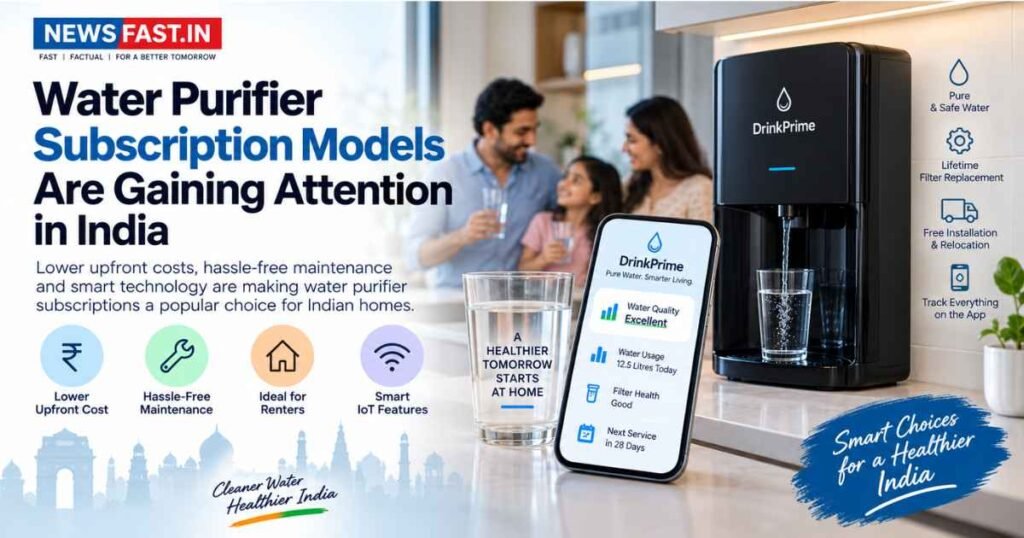
Traditionally, buying a water purifier meant paying a significant amount upfront and then taking responsibility for installation, servicing and filter replacements. Water purifier subscription services offer a different model: instead of purchasing the appliance outright, consumers can access a purifier through a recurring payment plan while the provider manages several aspects of installation and maintenance.
The emergence of this model reflects a broader shift in consumer preferences toward convenience, predictable expenses and flexible access to essential products.
What Is a Water Purifier Subscription?
A water purifier subscription is essentially a service-based approach to accessing a water purification system.
Instead of making a large upfront purchase, a customer typically pays a recurring monthly or periodic fee for the purifier and associated services. Depending on the provider and plan, installation, maintenance, filter replacements and relocation may also be included.
DrinkPrime is one example of this model in India. Its current subscription offering includes smart water purifiers, multiple plan options and services such as installation and maintenance. The company currently advertises plans starting from ₹349 per month, although pricing and availability can vary by product and location.
This approach is particularly relevant for consumers who do not want to make a large upfront investment in a water purifier.
Why Are Consumers Considering Subscription-Based Purifiers?
Several factors can influence a household’s decision to consider a subscription rather than purchasing a purifier.
1. Lower Upfront Commitment
Buying a water purifier can require a relatively large initial payment. The appliance itself is only one part of the expense, as installation, maintenance and filter replacements can add to the long-term cost.
A subscription model spreads the expense over time.
For consumers who prefer managing their household budget through predictable recurring payments, this can make accessing a purifier easier.
2. Maintenance Can Be Simpler
Water purifiers require periodic maintenance. Filters and other components eventually need attention, and a neglected purifier may not perform as expected.
One attraction of a managed subscription is that servicing and filter-related responsibilities can be handled by the provider rather than entirely by the customer.
DrinkPrime currently advertises lifetime free maintenance and filter replacements as part of its subscription proposition. Consumers should nevertheless check the specific terms of the plan they select before subscribing.
3. Flexibility for Renters
Homeowners may be comfortable purchasing a purifier that they expect to use for several years. Renters can have a different calculation.
Someone living in a rented apartment may not want to purchase and permanently install an appliance that becomes inconvenient to move later.
Subscription-based services can offer greater flexibility. DrinkPrime currently lists free relocation and easy returns among the features of its subscription service.
This can make the model particularly interesting for people who move homes relatively frequently.
Smart Technology Is Adding Another Dimension
The subscription model is not the only change taking place in the water-purification market.
Modern purifiers are also incorporating connected technology.
IoT-enabled appliances can collect and communicate information that was previously unavailable to users. This can include usage information, device status and maintenance-related information.
DrinkPrime describes its purifiers as using IoT technology and provides an app through which users can track water consumption, access a personalised water-quality report, monitor filter health and raise service requests.
This combination of hardware, software and ongoing service represents a shift from selling an appliance to providing an ongoing household service.
Subscription vs Traditional Ownership
Neither purchasing nor subscribing to a water purifier is automatically the right choice for everyone.
The better option depends on the household’s circumstances.
Traditional Ownership
Buying may make sense for consumers who:
- Want to own the appliance outright
- Plan to use it for many years
- Prefer a one-time purchase
- Are comfortable managing maintenance themselves
- Have already compared long-term ownership costs
However, buyers should account for maintenance, filter replacement and potential repair expenses when calculating the total cost.
Subscription
A subscription may be attractive to consumers who:
- Want to avoid a large upfront appliance purchase
- Prefer recurring payments
- Rent their home
- Want maintenance handled by the provider
- Value relocation flexibility
- Prefer accessing newer technology without buying another appliance
The important point is to compare the total cost over the expected period of use, rather than looking only at the monthly subscription price.
What Should Consumers Check Before Subscribing?
The growing popularity of subscription services does not mean consumers should subscribe without comparing the details.
Before selecting a plan, it is worth checking several factors.
Service Availability
First, confirm whether the service operates in your city or locality.
Availability can differ between locations, so consumers should verify coverage before making a decision.
Monthly or Periodic Cost
Look at the actual recurring payment and determine how much the service will cost over six months, one year or longer.
A low monthly price does not necessarily mean a lower total cost.
Lock-In Period
Some plans may have minimum subscription periods or lock-in conditions.
Understanding these terms before subscribing can prevent surprises later.
Deposit and Additional Charges
Consumers should check whether the provider requires a refundable deposit, installation-related charges or other payments.
For example, DrinkPrime’s current plan information states that a fully refundable ₹1,500 deposit is payable along with the selected subscription plan.
Maintenance and Filter Policy
It is also important to understand exactly what maintenance and replacement services are included.
A subscription becomes more valuable when the customer clearly understands which costs are covered and which are not.
Cancellation and Return Conditions
Before signing up, read the cancellation, return and relocation policies.
These conditions become especially important for renters and customers who may move to another city.
Are Subscription Models Suitable for Every Household?
Not necessarily.
A household that expects to use the same purifier for many years may find traditional ownership more suitable after comparing the long-term costs.
On the other hand, renters, students, young professionals and households that prefer predictable service costs may find subscription models more convenient.
The key is to evaluate the service based on actual household requirements rather than assuming that renting is always cheaper than buying.
Referral Programs Are Also Becoming Part of the Experience
Digital services frequently use referral programs to encourage existing customers to introduce new users to a service.
The same concept can be found in subscription-based businesses.
Consumers researching a particular service may come across referral offers while comparing subscription options. For example, someone considering a DrinkPrime subscription may search for a DrinkPrime Referral Code to determine whether a current referral benefit is available.
However, referral benefits can change over time. Customers should always verify the applicable offer, eligibility requirements and terms before using a referral code.
What Does This Mean for the Future of Home Appliances?
The rise of appliance subscriptions could have implications beyond water purifiers.
The underlying idea is simple: consumers do not necessarily need to own every physical product they use.
Instead, they can pay for access to a product combined with installation, maintenance, upgrades and other services.
This model could become increasingly attractive where appliances require regular maintenance or where technology changes quickly.
For businesses, subscription models can create an ongoing relationship with customers rather than ending the relationship at the point of sale.
For consumers, the benefit can be convenience and reduced responsibility for maintenance.
However, the success of the model ultimately depends on whether the service delivers sufficient value compared with simply buying the product.
The Shift From Products to Services
The water-purifier market illustrates a broader change in consumer behaviour.
A purifier used to be viewed primarily as a physical appliance sitting in the kitchen. Today, it can be part of a larger service involving connected technology, mobile applications, maintenance and recurring payments.
This shift is consistent with the wider growth of the subscription economy.
Consumers increasingly expect companies to provide not just a product but also the services surrounding it.
For essential household appliances, that could mean installation, maintenance, technical support, relocation and upgrades becoming part of a single customer experience.
Final Thoughts
Water purifier subscriptions are an interesting development in India’s evolving consumer market.
For some households, purchasing a purifier outright may remain the most practical choice. For others, a subscription can provide a combination of lower upfront commitment, managed maintenance and greater flexibility.
The emergence of smart, connected purifiers adds another layer to this trend by combining physical appliances with apps and ongoing digital services.
As subscription-based models continue to develop, consumers should focus on the complete value proposition rather than simply comparing monthly prices. Understanding the purification technology, service coverage, maintenance policy, lock-in period, deposit, cancellation terms and total cost can help households make a more informed decision.
